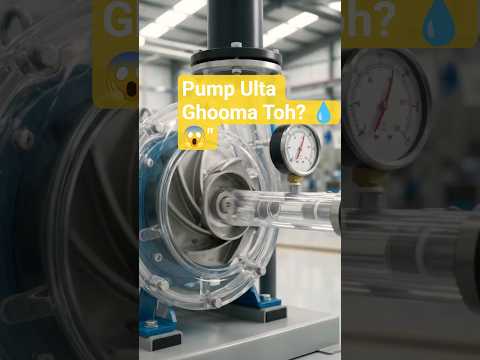
Centrifugal pumps are vital workhorses in modern manufacturing, water treatment facilities, and processing plants. In the field of industrial engineering, ensuring these systems operate correctly is essential for maintaining process efficiency and preventing equipment failure. However, a common issue during setup or maintenance involves improper electrical connections in a 3-phase pump, causing the motor and impeller to rotate in reverse.
So, what actually happens when a 3-phase centrifugal pump runs in reverse? Here is a breakdown of the mechanical and operational consequences.
1. The Pump Still Discharges Fluid (But with Poor Efficiency)
A widespread myth is that running a centrifugal pump backward will reverse the direction of fluid flow—sucking water from the discharge pipe and pushing it back into the suction line. In reality, centrifugal force still pushes the fluid outward toward the discharge port.
However, because the impeller vanes are specifically curved to direct fluid efficiently, reverse rotation severely impairs hydrodynamic performance. The pump will experience: * Significant drop in flow rate: Output can drop by 50% or more. * Severe loss of head pressure: The pump struggles to move fluid against resistance. * Higher energy consumption: The motor works harder while producing far less useful work.
2. Risk of Severe Mechanical Damage
Operating a centrifugal pump in reverse is not just inefficient; it can also cause costly mechanical failures: * Impeller Dislodgement: On pumps where the impeller is threaded onto the shaft, reverse rotation can unscrew the impeller, leading to catastrophic internal damage. * Mechanical Seal Wear: Insufficient fluid flow can cause dry running or excessive heat buildup around the mechanical seal, causing premature failure. * Increased Vibration and Noise: Unbalanced hydraulic forces create turbulence inside the pump casing, causing excessive vibration that damages bearings and shafts over time.
3. Why Rotation Checks Matter in Industrial Engineering
Preventing reverse rotation is a critical step during equipment commissioning and maintenance. In modern industrial engineering practices, technicians always perform a quick "bump test"—energizing the motor for a split second—to visually verify the shaft's rotational direction before connecting the pump to the piping system. Installing phase-rotation meters or phase-reversal relays also ensures that 3-phase power connections remain correct.
Final Thoughts
A backward-rotating centrifugal pump might not reverse your piping system, but it will ruin efficiency and cause avoidable wear. Correct installation, rigorous testing, and basic troubleshooting are essential practices to keep industrial systems running smoothly and reliably.