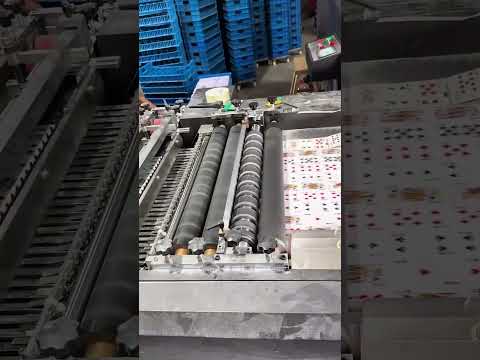
Have you ever paused to consider the intricate journey a deck of cards takes before it reaches your poker table? While a single playing card may seem like a simple piece of coated paper, its creation is a marvel of modern engineering. From the initial ink application to the final shrink-wrap, the journey is defined by speed, precision, and the power of industrial technology.
The Heart of the Process: High-Speed Printing
The manufacturing process begins with massive rolls of specialized cardstock. These aren't your average sheets of paper; they are often "black-core" or "blue-core" stocks designed to prevent transparency. The real magic happens at the industrial printing press. Using high-definition offset printing, these machines apply vibrant colors and intricate designs to both sides of the large sheets simultaneously.
At this stage, consistency is paramount. At the heart of this efficiency is production line automation, which ensures that thousands of sheets can be printed per hour with zero deviation in color or alignment. This level of synchronization is essential for professional-grade cards, where even the slightest printing error could "mark" a card and ruin a game’s integrity.
Precision Cutting and Finishing
Once the ink has dried and a protective varnish or "linen finish" has been applied to give the cards their signature slide, the large sheets move to the cutting phase. This is where the sheets are transformed into individual cards. Using programmable guillotine cutters and die-cutting machines, the sheets are sliced into strips and then into individual cards with rounded corners.
The transition from printing to finishing is where production line automation truly shines. High-speed sensors and robotic arms monitor the flow, ensuring that every card is cut to a tolerance of fractions of a millimeter. This automation eliminates the risk of human error, ensuring that every deck is perfectly uniform—a requirement for casinos and professional players worldwide.
Sorting, Quality Control, and Packaging
In the final stage, the cards must be sorted into their respective suits and ranks. Automated collation machines gather the cards in a specific order, creating a complete 52-card deck (plus jokers) in seconds. Before they are tucked into their boxes, high-speed camera systems inspect the cards for any physical defects or printing blemishes.
Modern manufacturing has turned what was once a labor-intensive craft into a streamlined, high-output industry. Through the integration of production line automation, manufacturers can maintain the highest quality standards while meeting the massive global demand for one of the world's most beloved pastimes. The next time you shuffle a deck, you’ll be holding the result of a perfectly synchronized industrial symphony.