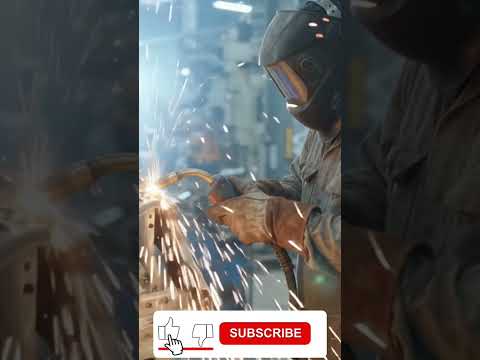
In today’s fast-paced industrial landscape, automation is no longer a futuristic concept—it is a daily operational necessity. Among the most impactful technological shifts in modern production lines is the widespread adoption of robotic welding. By taking over complex, high-volume, and repetitive tasks, advanced assembly machinery has fundamentally transformed how heavy equipment, automotive components, and intricate metal structures are built.
How Robotic Welding Achieves Unmatched Precision
Robotic welding combines cutting-edge control software, real-time sensory feedback, and multi-axis mechanical arms to execute flawless welds continuously. In traditional manual welding, operator fatigue and physical strain can introduce minor defects or inconsistent seam quality over time.
Automated welding systems eliminate these variables entirely. High-tech vision sensors continuously monitor parameters such as arc stability, seam alignment, and thermal output. This ensures every weld meets precise engineering specifications with 100% repeatability, drastically lowering defect rates.
Key Advantages for Modern Production Lines
Upgrading to automated systems delivers immediate operational benefits for manufacturing facilities:
- Higher Throughput: Robotic systems work continuously at peak speed without performance drops, significantly shortening production cycles.
- Enhanced Safety: Welding exposes human operators to extreme thermal heat, bright arc flashes, and hazardous toxic fumes. Automated equipment handles these high-risk tasks, allowing workers to move into safer, supervisory roles.
- Minimized Material Waste: Precise robotic control uses exact amounts of filler wire and shielding gas, reducing scrap material and costly rework.
By integrating state-of-the-art assembly machinery, companies can build stronger, more reliable products while optimizing their overall operational costs.
The Future of Smart Manufacturing
As artificial intelligence and machine learning technologies mature, automated welding systems will become even more adaptive and self-correcting. The continuous evolution of modern assembly machinery ensures that factories can seamlessly scale production, meet demanding deadlines, and maintain rigorous quality standards in a competitive global market.