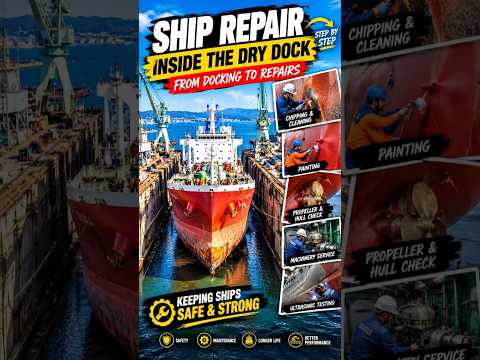
When a massive commercial vessel navigates the open seas for years, it endures extreme pressures, saltwater corrosion, and relentless wear and tear. But what happens when these ocean giants need a complete overhaul? They head straight into the dry dock. In the world of modern maritime logistics, maintenance engineering plays a pivotal role in ensuring these colossal ships remain safe, efficient, and seaworthy.
Entering the Dry Dock: A Feat of Scale and Precision
Guiding a multi-ton vessel into a narrow dry dock is an extraordinary engineering challenge. Once the ship is aligned over heavy support blocks, millions of gallons of water are pumped out of the enclosure. This exposes the submerged sections of the hull, rudder, and propulsion system—areas that are completely invisible while the ship is operational at sea.
This routine yet critical transition marks the beginning of major repair, inspection, and servicing protocols. Without taking the ship out of the water, thorough structural evaluations and necessary underwater repairs would be virtually impossible.
The Power of Maintenance Engineering in Maritime Operations
Once the water drains, specialized teams move in to begin comprehensive overhaul procedures. This is where maintenance engineering shines brightest. Engineers meticulously inspect the hull for microscopic fractures, perform non-destructive testing, and scrape away thick layers of marine growth like barnacles and algae that drastically increase hydrodynamic drag.
From restoring massive propellers to overhauling internal piping and main engine components, every step relies on precise calculations and heavy-duty equipment. By applying advanced maintenance engineering principles, shipyards can catch minor structural anomalies before they escalate into catastrophic failures, saving ship owners millions in emergency repairs and avoiding costly operational downtime.
Restoring Ocean Giants for the High Seas
Beyond structural repairs, dry docking allows for crucial upgrades that boost fuel efficiency and reduce environmental impact. Applying high-performance anti-fouling coatings, recalibrating steering mechanisms, and upgrading onboard automation are all essential tasks performed during this phase.
As this exciting ship repair journey unfolds, watching a massive vessel enter dry dock serves as a striking reminder of human ingenuity. It demonstrates how complex engineering, skilled craftsmanship, and proactive maintenance work together to keep the global maritime supply chain moving safely forward.