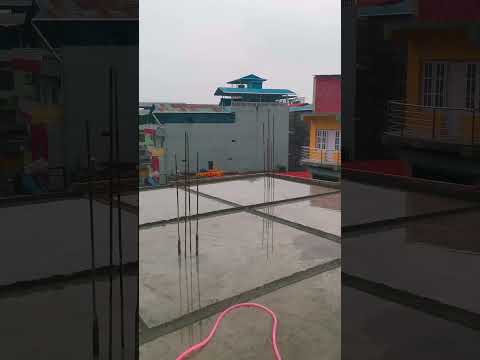
When it comes to building a home or a commercial structure, the roof slab is one of the most critical components. While many people focus on the quality of the cement or the thickness of the reinforcement bars, the real strength of a roof is determined after the concrete is poured. This is where the meticulous application of process engineering comes into play through a method known as water ponding.
Why Curing Matters for Structural Integrity
Curing is the process of maintaining satisfactory moisture content and temperature in concrete for a period of time immediately following placement. Without proper curing, concrete dries too quickly, leading to shrinkage cracks, reduced strength, and a shorter lifespan for the building. By viewing construction through the lens of process engineering, we can treat concrete hydration as a controlled chemical reaction that requires a specific environment to reach its maximum compressive strength.
The Water Ponding Technique Explained
Water ponding is widely considered the most effective method for curing horizontal surfaces like roof slabs. The process involves creating small dikes or "bunds" out of clay or lean mortar across the concrete surface. These bunds divide the roof into several small rectangular ponds, which are then filled with water to a depth of about 2 to 3 inches.
By keeping the concrete submerged, you ensure that the water lost to evaporation is constantly replenished. This constant saturation is vital for the chemical process of hydration, allowing the concrete to gain its full structural potential without the risk of thermal cracking.
Optimizing the Process for Success
From a process engineering perspective, timing and duration are the two most important variables in the water ponding method.
- Initial Setting: You should begin the ponding process as soon as the concrete has hardened sufficiently to prevent the surface from being damaged by the water or the construction of the bunds.
- Duration: For standard Portland cement, the water should remain on the roof for a minimum of 7 to 10 days. In colder climates or when using specific additives, this duration may need to be extended to 14 days.
- Consistency: It is vital to ensure that the ponds do not dry out during the curing period, as intermittent drying can lead to surface scaling.
Conclusion
Water ponding is more than just a traditional construction habit; it is a scientifically backed method to ensure the longevity of your structure. By following these civil engineering tips and respecting the underlying principles of the curing process, you can guarantee a leak-proof, crack-free, and incredibly strong concrete roof.