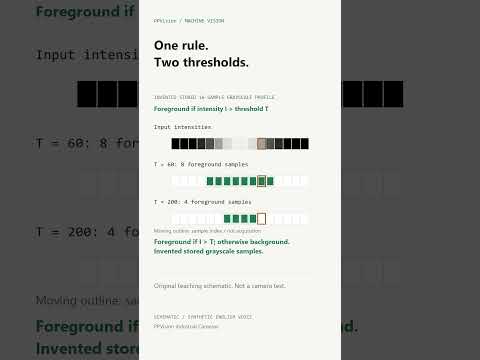
In the world of industrial automation, precise measurement and visual analysis are critical. At the heart of this process lies the machine vision system, an advanced technology capable of capturing digital images and translating them into actionable data. However, processing an image is rarely as simple as taking a photograph. Small adjustments in algorithm parameters—specifically image thresholding—can dramatically alter how an image is interpreted.
What is Image Thresholding?
When an image sensor captures a target, it converts light intensities into a grid of digital pixels, often represented as a grayscale profile. Each pixel holds a numeric value ranging from pure black (0) to pure white (255).
To detect edges, measure object widths, or locate defects, processing software applies a "threshold." This threshold acts as a numeric cutoff limit: pixel values above the chosen number are categorized as part of the object or background, while values below are categorized as the opposite. In essence, thresholding converts complex grayscale profiles into simplified binary data for analysis.
The Relationship Between Thresholds and Pixel Span
A fascinating aspect of digital image analysis is how changing a single setting alters spatial measurement. Imagine analyzing a stored one-dimensional grayscale profile of an object where pixel values rise gradually from 0 (darkness) to 240 (peak brightness) and then drop back down.
If you set a low grayscale threshold (for example, a value of 40), the processing software registers a wider range of pixels as part of the detected feature. Conversely, if you raise the threshold to a higher value (such as 160), fewer pixels meet the criteria, resulting in a significantly narrower measured width. Even though the physical object and the original captured image remain completely identical, the calculated pixel span changes entirely based on your chosen threshold.
This phenomenon demonstrates why calibrating a machine vision system requires careful consideration. A slight shift in threshold levels can lead to varying measurement results, directly impacting quality control and dimensional inspection accuracy.
Optimizing Precision for Reliable Results
To achieve consistent and accurate measurements, engineers must evaluate ambient lighting, sensor resolution, and software parameters together. Understanding how threshold settings directly influence pixel span ensures that your automated inspection processes remain reliable and repeatable.
By mastering these fundamental image processing principles, you can maximize the accuracy and performance of any industrial machine vision system.