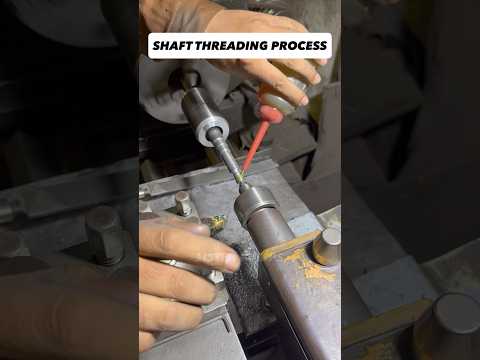
The art of shaft threading has long been a benchmark of skill in the mechanical engineering world. Traditionally, achieving the perfect thread required a combination of high-quality lathe machinery and the seasoned intuition of a master operator. However, as we move further into the era of Industry 4.0, the integration of machine learning in manufacturing is fundamentally changing how we approach these high-precision tasks.
The Evolution of the Shaft Threading Process
Shaft threading involves creating helical grooves on a cylindrical surface, a process critical for fasteners, lead screws, and transmission components. While manual and CNC lathes have provided the foundation for this work for decades, they often face challenges such as tool wear, thermal expansion, and material inconsistencies. These variables can lead to micro-defects that compromise the structural integrity of the component.
By implementing machine learning in manufacturing, facilities can now utilize real-time data to mitigate these risks. Sensors attached to the lathe monitor vibrations, temperature, and acoustic emissions during the threading process. This data is processed by algorithms that can predict tool failure or surface roughness before they occur, allowing for autonomous adjustments mid-cycle.
Enhancing Precision with Data-Driven Insights
The true power of modern machining lies in the ability to learn from every cut. Machine learning models analyze thousands of threading cycles to identify the "golden run"—the perfect set of parameters for a specific material. This level of optimization ensures that every shaft produced meets exact specifications with minimal waste.
Furthermore, machine learning in manufacturing plays a pivotal role in predictive maintenance. Instead of waiting for a machine to break down, AI-driven systems alert operators to subtle deviations in motor torque or spindle alignment. This shift from reactive to proactive maintenance drastically reduces downtime and extends the lifespan of expensive lathe equipment.
The Future of the Workshop
As we look at the progress made in shaft threading and general lathe operations, it is clear that the human-machine collaboration is reaching new heights. Skilled machinists are now becoming "augmented operators," using digital insights to push the boundaries of what is possible in metalworking. The marriage of traditional craftsmanship and advanced computation is not just a trend; it is the new standard for global production.