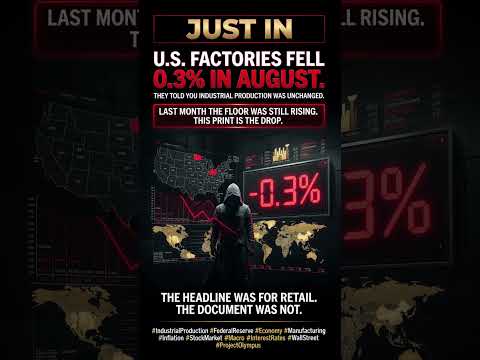
The economic landscape is showing new signs of cooling as recent data reveals a surprising drop in American manufacturing activity. Despite initial assumptions that economic momentum was holding steady, U.S. factory output officially contracted by 0.3% in August. This sudden decline has reignited discussions among economists and investors regarding the overall momentum of the nation's manufacturing sector.
Breaking Down the 0.3% Drop
While earlier reports suggested that output remained unchanged, closer inspection of the revised figures tells a different story. The 0.3% drop in factory output highlights ongoing pressures faced by manufacturers across the country. Key factors contributing to this contraction include elevated interest rates, fluctuating global demand for consumer goods, and increasingly cautious corporate spending.
Factory output serves as a crucial engine for economic growth. When manufacturing slows down, the ripple effects can quickly extend across international supply chains, corporate revenues, and employment figures.
Why Industrial Production Metrics Matter
Understanding monthly shifts in industrial production is essential for gauging where the broader economy is headed. As a primary economic indicator, industrial production measures the real output of manufacturing, mining, and electric and gas utilities. A dip in factory output often signals that businesses are scaling back operations in response to tighter financial conditions or softer consumer demand.
For market analysts and business leaders, monitoring industrial production trends provides clarity on whether federal monetary policies are succeeding in taming inflation without pushing core production sectors into a prolonged slowdown.
What Lies Ahead for U.S. Manufacturing?
As the sector navigates these economic headwinds, attention now turns to how businesses and policymakers will adapt. If borrowing costs remain elevated, manufacturers may continue to delay major capital investments and optimize existing inventory rather than expanding capacity. Conversely, potential policy adjustments or stabilizing consumer sentiment could provide the relief needed for output to recover in the final quarters of the year.
For now, industry experts and investors alike should monitor upcoming economic releases to determine whether August's drop represents a temporary lull or a longer-term trend in manufacturing activity.