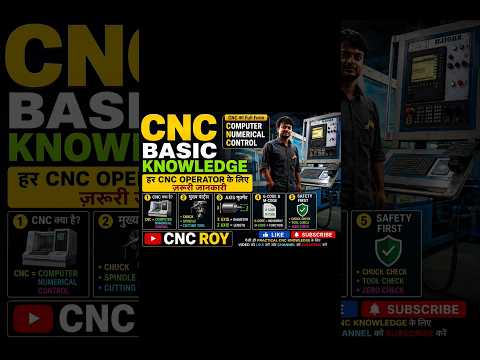
The manufacturing industry has evolved significantly over the last few decades, moving from manual operations to high-precision automated systems. At the heart of this transformation is CNC (Computer Numerical Control) technology. Whether you are a student, a hobbyist, or an aspiring machine operator, understanding the fundamentals of CNC machines is the first step toward a successful career in modern production.
What exactly is a CNC Machine?
CNC stands for Computer Numerical Control. In simple terms, it is a method where a computer program controls the movement of factory tools and machinery. Unlike manual machines where a person turns wheels and levers, a CNC machine follows a pre-programmed sequence of instructions (often called G-code and M-code) to cut, drill, or shape material with extreme precision.
The Essential Components of CNC
To master the basics, you must first understand the primary parts that make these machines work. Most CNC systems consist of: * The Controller: This is the "brain" of the machine. It reads the code and sends signals to the motors. * The Drive System: This includes the motors and lead screws that move the machine parts along different axes (X, Y, and Z). * The Spindle: The part that holds and rotates the cutting tool at high speeds. * The Worktable: Where the raw material is securely clamped during the machining process.
The Daily Life of a Machine operator
While the computer handles the movements, the human element remains vital. A skilled machine operator is responsible for setting up the machine, loading the correct tools, and ensuring the raw material is properly aligned. Beyond just "pressing buttons," a professional machine operator must monitor the process for any unusual sounds, check the dimensions of the finished parts for quality control, and perform routine maintenance to keep the equipment running smoothly.
Why Learn CNC Today?
Learning CNC basics offers a gateway into a high-demand industry. CNC machines are prized for their ability to produce complex parts with a level of accuracy that is impossible to achieve by hand. They offer high speed, repeatability, and safety, making them indispensable in aerospace, automotive, and medical device manufacturing.
Conclusion
Starting your journey in the world of CNC might seem intimidating, but by focusing on the basics—understanding the machine components, learning the programming logic, and practicing precision—you can build a solid foundation. With the right training and a dedication to quality, you can become a highly efficient professional in the manufacturing world.