The Machine Knows What, but the Machine Operator Knows Why: Bridging the Gap in Industrial Automation
In the high-stakes environment of modern manufacturing, every second of downtime translates directly to lost revenue. Today’s factories are more connected than ever, filled with sensors and software designed to track every heartbeat of the production line. However, a common misconception is that advanced automation eliminates the need for human insight. In reality, the most efficient floors operate on a simple truth: the machine knows what happened, but the human knows why.
The Limitation of Raw Data
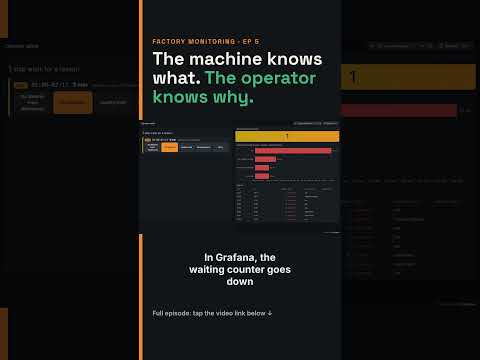
When a production line grinds to a halt, the system immediately logs the event. It records the exact millisecond the idle period began and the moment it ended. Sophisticated dashboards, like Grafana, can then take this raw data and visualize it, creating a clear map of productivity gaps.
But data in a vacuum is just noise. A sensor can tell you the conveyor belt stopped, but it cannot always distinguish between a routine adjustment, a minor jam, or a catastrophic mechanical failure. This is where the gap between digital tracking and physical reality begins.
Why the Human Element is Essential
This is where the expertise of a skilled machine operator becomes the most valuable asset on the factory floor. While the machine tracks the "what," the operator provides the "why." When an idle stop ends, a prompt or "card" appears on the operator’s tablet. With a single, intuitive tap, the human can categorize the event based on what they witnessed firsthand.
By integrating the human element into the digital data flow, the system can automatically re-sort downtime reasons. This allows management to see not just that the line was down, but that those lost minutes were caused by a specific, recurring issue that software alone could never have diagnosed. This synergy ensures that the machine operator is not just a manual laborer, but a vital source of operational intelligence.
Streamlining the Feedback Loop
The goal of modern industrial technology is not to create more paperwork for the workforce; it is to reduce friction. By using streamlined tablet interfaces, a machine operator can provide context to the data without interrupting their primary workflow.
When the machine and the human work in tandem, "smart" manufacturing truly comes to life. The machine provides the precision and the logging, while the human provides the nuance and the problem-solving. This partnership ensures that downtime isn't just recorded—it's understood and, eventually, eliminated.