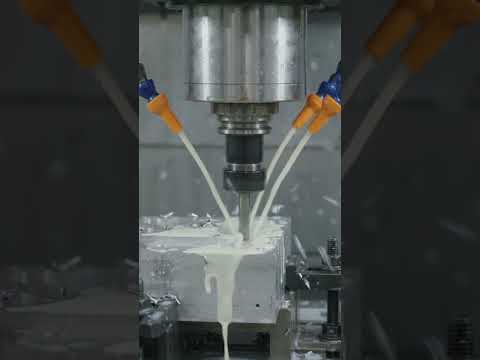
Have you ever wondered how raw blocks of steel, aluminum, or titanium are transformed into complex engine components or intricate surgical tools? The answer lies in the incredible power of computer numerical control, better known as CNC machinery.
In modern manufacturing engineering, precision is everything. What once required hours of manual labor and painstaking measurements can now be executed seamlessly with sub-millimeter accuracy. But how exactly does this technology work behind the scenes?
What is CNC Machinery and How Does It Work?
At its core, CNC machinery refers to automated manufacturing equipment controlled by pre-programmed computer software. Instead of a human machinist manually turning wheels and levers to shape material, a digital blueprint dictates every single movement of the machine's cutting tools.
The transformation process begins with a 3D model created in Computer-Aided Design (CAD) software. This design is then translated into machine-readable instructions, usually known as G-code. This code provides precise commands regarding:
- Movement Coordinates: Exact positioning along multiple axes (X, Y, Z, and beyond).
- Cutting Parameters: Spindle speeds, feed rates, and depth of cut.
- Tool Changes: Automatic swapping of drill bits, end mills, and lathes depending on the required cut.
Why CNC Machinery Dominates Modern Manufacturing
The widespread adoption of CNC machinery has completely revolutionized critical industries such as aerospace, automotive, medical device fabrication, and electronics. The key advantages include:
- Unmatched Precision: Machines can repeatedly cut and shape components to tolerances far tighter than a human hair.
- Maximum Efficiency: Automated workflows drastically reduce production time, enabling rapid prototyping and continuous mass production.
- Complex Geometries: Advanced multi-axis CNC mills can create intricate 3D shapes that are virtually impossible to craft using traditional manual techniques.
The Future of Manufacturing Engineering
As smart factories continue to evolve, CNC technology is integrating artificial intelligence, real-time sensor feedback, and automated material handling. Understanding the fundamentals of CNC operations offers a fascinating glimpse into how the modern physical world is built—one precise cut at a time.