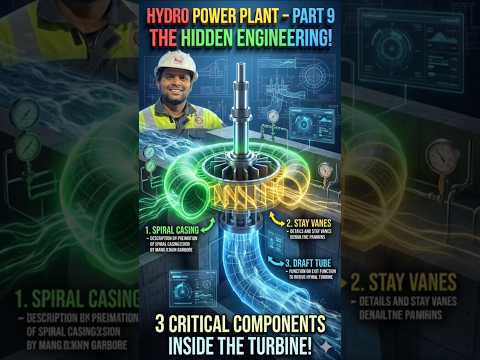
Hydroelectric facilities represent a remarkable triumph of modern energy infrastructure. At the heart of many medium-to-high head power plants sits the Francis turbine, a versatile reaction turbine engineered to convert hydraulic energy into reliable electrical power. In the field of modern plant engineering, understanding the intricate internal mechanics of the Francis turbine is essential for optimizing energy efficiency and operational longevity.
Let’s explore the primary internal components that make the Francis turbine an absolute powerhouse of hydro energy.
1. The Spiral Casing (Volute)
The spiral casing, often referred to as the volute, is the doughnut-shaped outer conduit that surrounds the turbine runner. As water enters from the penstock, the casing's cross-sectional area gradually decreases. This specific geometric design ensures that water is evenly distributed around the entire circumference of the runner while maintaining uniform pressure and velocity.
2. Stay Vanes and Guide Vanes
Located directly inside the spiral casing, stay vanes and guide vanes perform dual functions critical to fluid flow and mechanical stability:
- Stay Vanes: These stationary vanes act as heavy structural pillars, supporting the overall load of the casing while smoothly directing water toward the guide vanes. In plant engineering, precision modeling of stay vanes is crucial to minimize fluid friction and hydraulic head loss.
- Guide Vanes (Wicket Gates): Unlike stay vanes, guide vanes are adjustable. They regulate the volume and angle of water striking the turbine runner blades, allowing plant operators to control power output according to dynamic grid demands.
3. The Draft Tube
Positioned at the exit of the Francis turbine runner, the draft tube is a gradually expanding pipe that connects the runner outlet to the tailrace. Its primary function is to convert the high kinetic energy of the exiting water into usable static pressure energy. By creating a partial vacuum at the runner outlet, the draft tube significantly increases the effective head and overall efficiency of the turbine system.
Conclusion
From the fluid dynamics of the spiral casing to the pressure recovery achieved by the draft tube, every component plays a vital role in seamless hydro generation. A comprehensive grasp of these internal mechanisms empowers professionals to design, maintain, and optimize power generation systems—proving that continuous advancement in plant engineering is key to sustainable clean energy.