Every time you step into your car, four thick rings of rubber stand between you and the open road. We rely on tires for safety, fuel efficiency, and smooth rides, yet few drivers stop to think about how these complex components are created. The transformation from raw materials to high-performance tires is a marvel of manufacturing engineering that combines chemistry, high-tech robotics, and rigorous quality control.
Here is a look behind the scenes at how modern car tires are actually made.
1. Formulating the Compound
Tires aren't just made of simple rubber; they are a sophisticated blend of natural rubber, synthetic polymers, carbon black, silica, and chemical additives. Each ingredient serves a specific purpose: carbon black provides durability and wear resistance, while silica improves wet grip and energy efficiency. Heavy industrial mixers blend these elements under extreme heat and pressure to create specialized rubber compounds tailored for different tire components.
2. Layer-by-Layer Assembly
Once the rubber is prepared, the tire building process begins. A modern tire is built from the inside out on specialized rotating drums. Cutting-edge manufacturing engineering ensures that every structural element—including inner liners, textile plies, steel belts, and bead bundles—is assembled with absolute precision. The steel belts give the tire its structural rigidity and puncture resistance, while the fabric layers provide flexibility and strength.
3. Vulcanization: The Curing Process
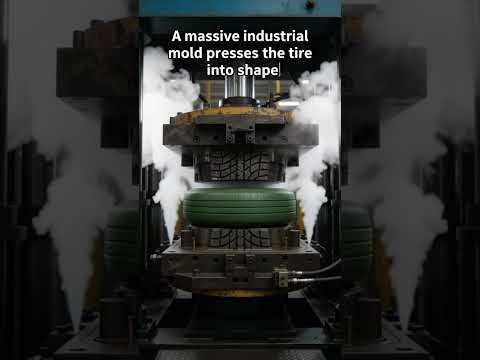
At this stage, the tire is called a "green tire." It possesses all its structural layers but lacks tread patterns and optimal elasticity. The green tire is placed inside a heated curing press equipped with heavy molds. Under intense thermal energy and steam pressure, the rubber undergoes vulcanization—a chemical reaction where sulfur cross-links the rubber molecules. This transforms the soft rubber into a tough, elastic material while stamping the tread pattern and sidewall lettering onto the tire.
4. Rigorous Quality Inspection
Before any tire hits the market, it undergoes strict quality control. Automated machinery and trained inspectors evaluate each unit for structural balance, surface defects, and internal flaws using X-ray imaging and high-speed spin testing.
Final Thoughts
Car tires are far more than simple rubber circles; they are intricate, highly technical products of modern manufacturing engineering. As electric vehicles demand quieter rides and smart technology transforms automotive design, tire manufacturing continues to evolve, pushing the boundaries of road safety and efficiency.